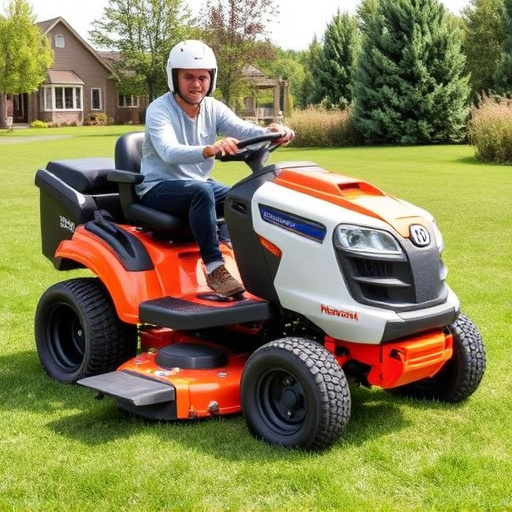
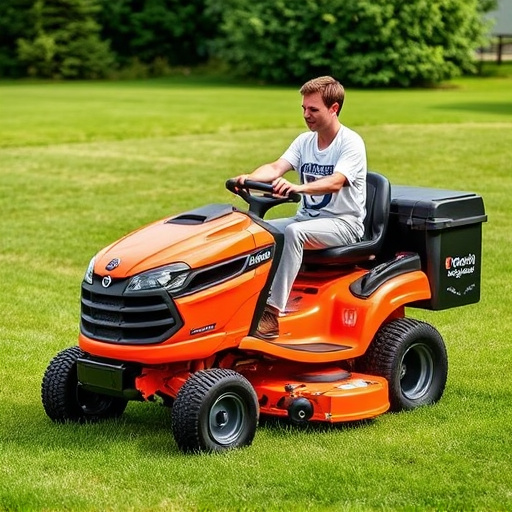
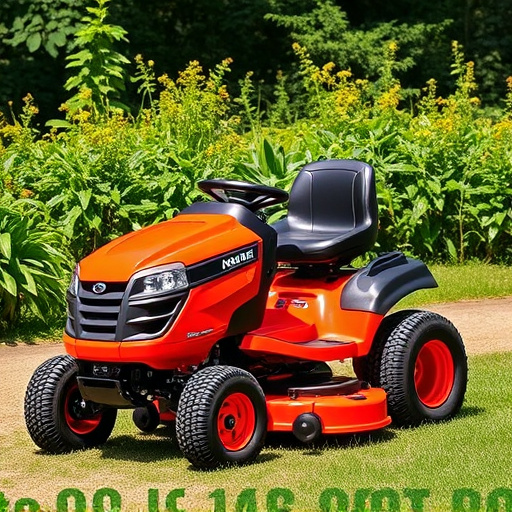
In the realm of lawn care, Husqvarna Ride-On Mowers have emerged as a powerful force, revolutionizing the way we maintain our outdoor spaces. This article aims to delve into the world of these advanced lawnmowers, exploring their design, impact, and role in shaping the future of landscaping. From their humble beginnings to their current global presence, Husqvarna mowers have become a symbol of efficiency, durability, and innovation. By the end of this journey, readers will gain a comprehensive understanding of why these machines matter and how they continue to evolve with technological advancements.
Understanding Husqvarna Ride-On Mower: A Definition and Its Essential Components
Definition:
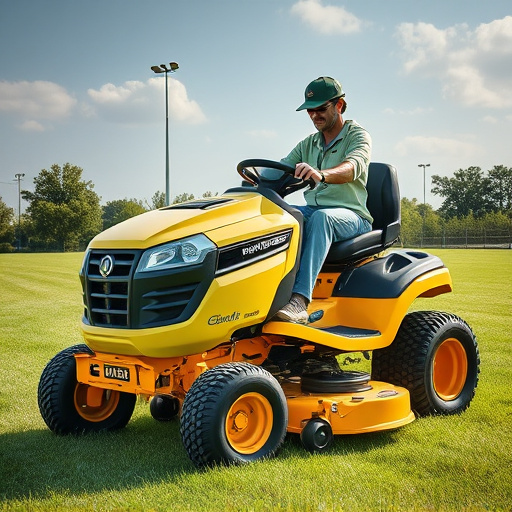
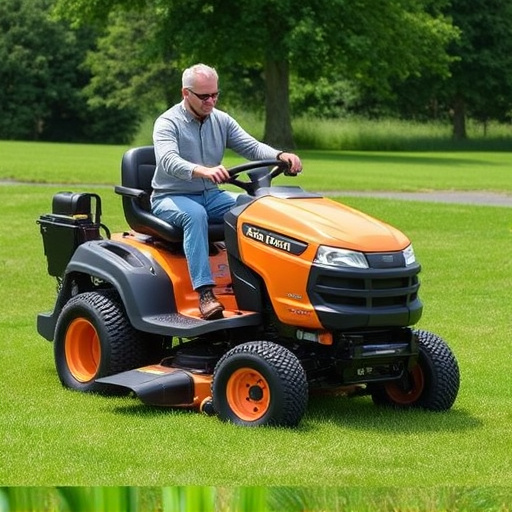
A Husqvarna Ride-On Mower, often referred to as a ride-on lawnmower or simply a “ride-on,” is a powered gardening machine designed for cutting grass and maintaining large areas of lawn. It offers a comfortable riding experience while providing efficient grass-cutting capabilities.
Key Components:
Deck: The cutting component of the mower, typically made of metal, with blades that rotate to cut grass.
Engine: The power source, ranging from gasoline to electric motors, driving the mower and deck.
Seat and Controls: A comfortable seat for the operator and a set of controls for steering and speed adjustment.
Transmission System: Transmits power from the engine to the wheels, enabling smooth and controlled movement.
Steering Mechanism: Allows the operator to navigate around obstacles and tight corners.
Grass Bagging or Discharging System: Collects or expels cut grass clippings for easy disposal or composting.
Historical Context and Evolution
Husqvarna, a Swedish company with a rich history in outdoor power equipment, introduced its first ride-on mower in the 1960s. This early model laid the foundation for what would become a diverse range of lawn care solutions. Over the decades, Husqvarna has continuously innovated, incorporating advanced technologies and design elements to meet the evolving needs of landscapers and homeowners. Today, their ride-on mowers are renowned for their durability, versatility, and cutting-edge features.
Global Impact and Trends
The influence of Husqvarna Ride-On Mowers extends far beyond Sweden’s borders, with a significant global footprint.
Region
Impact and Trends
North America
Strong demand from residential and commercial landscapers. Electric ride-ons gaining popularity due to environmental concerns.
Europe
Leading market share in premium lawn care equipment. Increasing adoption of autonomous, connected mowers.
Asia-Pacific
Rapid urbanization driving the need for efficient lawn care solutions. Growing preference for quiet, eco-friendly electric models.
Middle East & Africa
Focus on large-scale landscaping projects for public spaces and golf courses. High appreciation for durable, high-performance machinery.
These trends showcase the global adaptability of Husqvarna mowers, with product lines tailored to specific regional needs and preferences.
Economic Considerations: Market Dynamics and Investment
The global ride-on mower market is a significant segment within the broader lawn care industry, generating substantial revenue. According to a 2022 report by Grand View Research, the market size was valued at USD 3.8 billion in 2021 and is expected to grow at a CAGR of 5.2% from 2022 to 2030.
Market Dynamics:
Demographic Shifts: Increasing urbanization and the rise of smart homes have fueled demand for efficient lawn care solutions, favoring ride-on mowers over traditional push models.
Environmental Awareness: Growing environmental consciousness has led to a shift towards electric and eco-friendly mowers, impacting purchasing decisions.
Technological Integration: The integration of GPS, sensors, and connectivity features is becoming standard, offering advanced lawn care management.
Investment Patterns:
Manufacturers: Major players like Husqvarna, Honda, and John Deere invest heavily in research and development to enhance product lines and stay competitive.
Retailers: Specialised outdoor equipment stores and online retailers cater to diverse customer needs, contributing to market growth.
Technological Advancements Shaping the Future
Husqvarna Ride-On Mowers have consistently been at the forefront of technological innovation in lawn care. Here are some key advancements:
Electric Power: Husqvarna offers a range of electric ride-ons, providing zero-emission, quiet operation, and reduced maintenance. The ‘Automa’ series features autonomous navigation, allowing mowers to cut grass efficiently without operator intervention.
Smart Connectivity: Mowers equipped with Bluetooth connectivity enable users to monitor performance, set schedules, and receive diagnostics via a dedicated app.
GPS and Navigation: Advanced GPS systems ensure precise cutting patterns and path planning, minimizing overlap and maximizing efficiency.
Autonomous Cutting Systems: Some models employ AI-powered algorithms for adaptive cutting, adjusting speed and direction based on grass height and terrain.
Ergonomic Design: Improved seating, steering controls, and operator comfort enhance productivity and reduce fatigue during extended use.
Policy and Regulation: Navigating Legal Requirements
The development and operation of Husqvarna Ride-On Mowers are subject to various policies and regulations worldwide, ensuring safety, environmental protection, and consumer rights.
Noise Pollution Control: Many countries have implemented noise limits for outdoor power equipment, leading Husqvarna to design quieter engines and incorporate sound-reducing features.
Emission Standards: Strict emission regulations in Europe and other regions have prompted the development of low-emission and electric ride-ons, reducing environmental impact.
Product Safety: Regulations ensure that mowers meet safety standards for operator protection, including guardrails, emergency stop mechanisms, and proper ventilation.
Warranty and Consumer Protection: Husqvarna offers extensive warranties, reflecting their commitment to product quality and consumer satisfaction.
Challenges and Criticisms: Overcoming Obstacles
Despite their numerous advantages, Husqvarna Ride-On Mowers face certain challenges and criticisms:
High Initial Cost: Premium ride-ons can be expensive, making them less accessible to small landscaping businesses or individual homeowners on tight budgets.
Maintenance Requirements: While modern designs reduce maintenance needs, regular servicing is still essential, adding to operational costs.
Environmental Concerns: Despite the push for electric and eco-friendly models, some critics argue that the production and disposal of batteries pose environmental challenges.
Complexity: Advanced features and technology can make these mowers seem complex to operate and maintain, requiring training for landscapers.
Strategies to Address These Issues:
Offer financing options and rental programs to make ride-ons more affordable.
Simplify maintenance routines and provide accessible repair services.
Invest in sustainable battery technologies and recycling programs.
Develop user-friendly interfaces and offer comprehensive training for operators.
Case Studies: Real-World Success Stories
Case Study 1: Urban Landscape Maintenance in New York City
A large urban landscape maintenance company in NYC adopted Husqvarna’s electric ride-on mowers for their fleet. The transition from traditional gasoline-powered models resulted in significant advantages:
Reduced Noise Pollution: The quiet operation of the electric mowers was well-received by residents, leading to improved customer satisfaction.
Lower Operating Costs: With no fuel costs and reduced maintenance needs, the company realized a 20% decrease in operational expenses within the first year.
Enhanced Efficiency: GPS navigation and autonomous cutting features allowed for faster and more precise grass cutting, improving overall productivity.
Case Study 2: Large-Scale Golf Course Management in Saudi Arabia
A renowned golf course in Saudi Arabia utilized Husqvarna’s high-end ride-on mowers to maintain their expansive greens and fairways. The results were impressive:
Consistent Grass Cutting: The advanced cutting systems provided uniform grass height, enhancing the overall aesthetic of the course.
Time Efficiency: Husqvarna’s GPS mapping and navigation reduced cutting time by 30%, allowing for more efficient fleet management.
Environmental Sustainability: The course’s commitment to eco-friendly practices was strengthened by the adoption of electric mowers, reducing carbon emissions.
Future Prospects: Emerging Trends and Strategic Considerations
The future of Husqvarna Ride-On Mowers looks promising, with several growth areas and emerging trends:
Electric Revolution: The demand for zero-emission, quiet, and eco-friendly electric ride-ons will continue to grow, driven by environmental concerns and government incentives.
Autonomous Lawn Care: Advanced AI and robotics will enable fully autonomous lawn care solutions, reducing the need for human operators.
Connected Ecosystem: Integration with smart home systems and IoT (Internet of Things) will allow mowers to communicate with other devices, optimizing lawn care routines.
Personalized Cutting Patterns: Using data analytics, mowers can learn and adapt to individual lawn preferences, offering customized cutting experiences.
Global Expansion in Emerging Markets: With increasing urbanization, there’s a significant opportunity for Husqvarna to expand its presence in Asia, Africa, and South America.
Conclusion: Riding into the Future of Lawn Care
Husqvarna Ride-On Mowers have come a long way since their inception, evolving into sophisticated lawn care solutions that cater to diverse global needs. Their impact extends beyond grass cutting; they contribute to efficient landscaping, environmental sustainability, and innovative outdoor power equipment. As technology continues to advance, Husqvarna’s commitment to research and development will be crucial in shaping the future of ride-on mowers.
By addressing challenges, embracing new technologies, and adapting to regional requirements, Husqvarna can solidify its position as a leader in the global lawn care market. With each passing season, these machines will continue to revolutionize the way we maintain our outdoor spaces, ensuring lush, well-groomed lawns for years to come.
FAQ Section: Answering Common Questions
Q: Are Husqvarna Ride-On Mowers suitable for small residential yards?
A: While they are designed for larger areas, some compact models can efficiently manage smaller yards. However, for extensive cutting tasks, a full-sized ride-on might be more suitable.
Q: How do I choose the right Husqvarna mower for my needs?
A: Consider factors like your lawn size, terrain, and desired features. Husqvarna offers various series catering to different user types, from homeowners to commercial landscapers.
Q: Can Husqvarna mowers be customized or upgraded?
A: Absolutely! Many models allow for customization with accessories like grass catchers, mulching kits, and LED lighting. Upgrades can enhance performance, comfort, and efficiency.
Q: Are electric Husqvarna mowers as powerful as their gasoline counterparts?
A: Electric models have made significant advancements in power output, rivaling gasoline engines in terms of cutting performance. The choice often comes down to noise levels, environmental considerations, and initial cost.
Q: How do I maintain my Husqvarna ride-on mower properly?
A: Regular maintenance includes oil changes, blade sharpening, and cleaning. Refer to the owner’s manual for specific guidelines, and consider a scheduled service routine to ensure optimal performance.
The Husqvarna R 316TX ride-on mower is a powerful and efficient choice for lawn care, featuring a robust 48V battery system, Power N Play technology, advanced suspension, and a spacious grass bag. Its 31.75-inch cutting deck, auto-adjusting heig…….
The Husqvarna Power N Play line offers professional landscapers and business owners efficient, versatile, and sustainable ride-on mowers with advanced technology, robust construction, and ergonomic designs. Models cater to specific needs, with v…….
Husqvarna Ride-On Mowers offer superior performance and innovative features like Power N Play technology for effortless navigation. Selecting the right model based on your terrain and space, comparing engine power and cutting capabilities, and p…….
Husqvarna's Power N Play technology offers hands-free cruise control for efficient and comfortable lawn care, transforming mowing from a chore into a relaxing activity. Their mowers cater to various needs, from small electric models to powe…….
Husqvarna's Cruise Control Technology, featuring its 'Power N Play' system, revolutionizes lawn care by simplifying and enhancing mowing experiences. This feature maintains consistent speed, reducing physical exertion and improvin…….
Husqvarna's Ride-On Mowers (zero-turn mowers) offer efficient lawn care with their compact size, powerful engines, and agile handling, enabling quick and precise mowing. The zero-turn design reduces mowing time, while the Power N Play syste…….
Power N Play offers a range of top-quality Husqvarna Ride-On Mowers, catering to various lawn care needs. These mowers provide exceptional performance and comfort for efficient lawn management, with models designed for different lawn sizes and c…….
The Husqvarna Power N Play ride-on mower is a top choice for lawn care enthusiasts due to its efficiency, zero-turn technology, and ergonomic design. With models tailored for various lawn sizes and terrains, these mowers offer powerful engines,…….
The Husqvarna Ride-On Mower range offers high-performance, innovative mowers suitable for both professional landscapers and homeowners. With models for various space sizes and terrains, these mowers feature advanced cutting systems, powerful eng…….
The Husqvarna RC 320Ts AWD Combi Model is a powerful and versatile ride-on mower designed for both professional landscapers and homeowners, combining AWD efficiency with combi model versatility. Its innovative Power N Play technology allows seam…….
The Husqvarna R 420TsX AWD ride-on mower is a powerful and efficient solution for large, uneven yards, offering superior traction with its all-wheel drive (AWD) system. Its intuitive Power N Play technology optimizes performance and provides a s…….
The Husqvarna R 214TC is a powerful and versatile ride-on mower ideal for large properties. With its advanced navigation, reliable engine, and cutting-edge technology, it offers an exceptional lawn care experience. This Husqvarna Ride On Mower f…….
The Husqvarna Ride-On Mower series offers versatile, efficient solutions for various lawn care needs, catering to both professionals and homeowners. Key models include the Power N Play system, renowned for its advanced cutting technology, safety…….
The Husqvarna Power N Play mowers offer a revolutionary pedal-operated system, ensuring exceptional maneuverability and comfort for all lawn care needs. With models suited to various lawn sizes and types, these compact yet powerful machines prov…….
Power N Play is a leading provider of professional lawn care services and top-tier Husqvarna mowers globally renowned for their quality and innovation. They offer a diverse range of models catering to various needs, from compact walk-behind mowe…….
The Husqvarna Electric Ride-On Mower Series offers efficient, eco-friendly lawn care with its Power N Play technology. Featuring quiet operation, powerful motors, and tailored models for various lawn sizes, these mowers revolutionize yard work……..
The Husqvarna Ride-On Mower is a powerful and versatile lawn care solution, ideal for various terrains thanks to its advanced traction system. Features like Power N Play enhance performance and control, making navigation around obstacles effortl…….
The Husqvarna RC 320Ts AWD combi model is a powerful and versatile Husqvarna Ride On Mower designed for efficient lawn care. Equipped with all-wheel drive (AWD) technology, it excels in navigating challenging terrain and offers exceptional maneu…….
The Husqvarna Ride-On Mower is a cutting-edge solution for lawn care, offering advanced features like the Power N Play system for precise navigation and adaptability. Designed for reliability, durability, and ease of operation, these electric mo…….
The Husqvarna R 420TsX AWD ride-on mower is a powerful and versatile tool for large or challenging lawns, featuring advanced AWD technology, robust engine, precise cutting system, and intuitive Power N Play control. Purchasing online offers conv…….